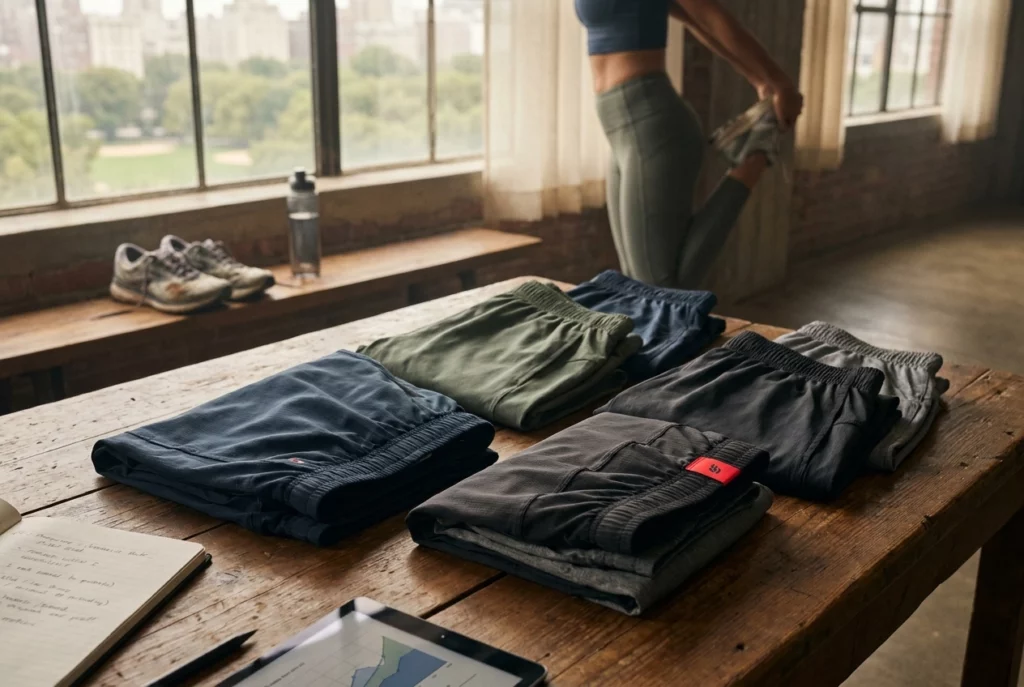
The right pair of running shorts can make or break your training. Whether you’re grinding through tempo runs, logging long miles on the weekend, or pushing the pace on the track, what you wear from the waist down matters more than most runners realize. Chafing, poor ventilation, and an uncomfortable fit are not just minor annoyances; they can derail your focus and affect your performance.
With countless options flooding the market at every price point, choosing the best running shorts has become surprisingly complicated. That’s exactly why we put this guide together. We’ve broken down the top picks across different run types, from daily trainers to race day efforts, and across a wide range of budgets so you don’t have to overspend to get quality gear.
In this list, you’ll find honest recommendations backed by real performance criteria, including liner quality, fabric technology, pocket placement, and overall durability. Whether you’re stepping up your training or simply replacing a worn-out pair, this guide gives you everything you need to find your perfect match.
How we choose and test running shorts at Enter2Run
Every pair of running shorts in this guide is assessed against Enter2Run’s fixed fit-and-mileage protocol before it earns a recommendation. That protocol covers four pillars: liner comfort, waistband security, pocket function, and chafe performance. Testing spans both roads and trails, across short efforts and longer distances, because a pair that feels fine on a dry 5K can become a problem after 45 minutes of hills, heat, and accumulated sweat. Chafe, in particular, shifts dramatically with humidity and pace, so no short gets a verdict from a single run type.
Our three core pain points mirror what intermediate runners actually complain about: chafe prevention, storage capacity, and temperature regulation at different efforts. Anti-chafing performance is shaped by fit stability as much as fabric choice, which is why waistband security and liner fit are evaluated together rather than in isolation. Storage is assessed practically: can the pockets hold a phone and two gels without bouncing? Temperature regulation is tested against liner type, since compression liners introduce a real heat trade-off that a loose brief does not.
No brand relationships, pay-for-placement arrangements, or affiliate links influence these picks. Recommendations are organised by use case and runner type. Each pick is labelled by budget tier (budget, mid-range, or premium) rather than a pinned price, because retail pricing shifts and a number that is accurate today may not be accurate next month.
What makes a running short actually work
Running shorts are a category where small design decisions compound quickly over miles. Understanding what each element actually does helps you pick the right pair before you learn the hard way at mile eight.
The built-in liner
The brief-style liner sewn inside most running shorts does three things at once: it replaces separate underwear, reduces direct skin-on-fabric friction along the inner thigh, and moves with your leg through the full gait cycle without bunching. If you are newer to run-specific gear, this is the single feature that separates a dedicated running short from an athletic short that happens to be worn while running. Shorts without a liner are not automatically worse, but they require you to manage friction through other means, typically compression tights worn underneath. For most runners doing road miles in warm weather, a well-fitted lined short is the simpler, cooler choice.
Inseam length and stride freedom
Inseam length shapes how freely your hip extends at pace, and the difference between a 3-inch and a 7-inch inseam is noticeable the first time you push into a faster interval. Shorter inseams (3 to 5 inches) move out of the way entirely, which is why faster recreational runners and those doing track work tend to prefer them. Longer inseams (7 inches and up) add thigh coverage, suit trail running where brush contact is a factor, and work well for runners who simply prefer more coverage at any pace. The debate between lined and unlined shorts often centres on this length question too, since longer-inseam styles frequently use a compression liner rather than a brief liner.
Chafe mechanics and how construction prevents it
Chafing is caused by repetitive friction, fabric moving against skin or against itself through thousands of stride cycles. The highest-risk zones are the inner thighs, the waistband edge, and any pocket opening that sits flush against skin. Flatlock seams address this by lying flat rather than creating a raised ridge that presses into skin with every step. Smooth liner waistbands remove the elastic-edge problem at the hip. Moisture-wicking fabrics matter here too because prolonged moisture softens skin, and softened skin abrades faster. This is why top-rated running shorts reviewed across major buying guides consistently treat chafe prevention as a primary evaluation criterion rather than a secondary comfort note.
Moisture management and fabric choice
Running shorts handle sweat differently than casual gym shorts because the volumes involved are higher and the duration is longer. Lightweight polyester and nylon blends pull moisture away from skin and release it through the fabric’s surface quickly. Cotton and heavy cotton blends do the opposite: they absorb moisture, hold it against skin, and become progressively heavier and more abrasive as mileage climbs. This is not a marginal difference on a 30-minute run, but it becomes significant on anything over an hour.
Weight and the 2-in-1 tradeoff
Weight in running shorts sits between roughly 3 and 7 ounces depending on construction. Lightweight lined shorts in the 3 to 4 ounce range move with the body; you stop noticing them quickly, which is the goal. Heavier 2-in-1 styles pair an outer shell with a compression liner, adding weight in exchange for muscle support and reduced vibration on long efforts. That tradeoff is worth making for some runners, particularly those doing long trail runs or those who find a compression layer reduces fatigue. For road running in moderate conditions, the lighter single-liner option is usually the better starting point, and you can layer up once you know what your body responds to over distance.
How to choose your inseam length
Inseam length shapes how a short moves with you, and getting it wrong shows up fast, either as restricted stride or as fabric riding up mid-run. Here is how each length earns its place in a training kit.
3-inch inseam
This is the track-and-race-day specialist. A 3-inch cut keeps fabric well clear of the hip flexors, which matters when you are driving your knees at speed during interval sessions or toeing the line at a 5K. The tradeoff is coverage: on easy recovery days or longer road miles, many runners find the exposure uncomfortable or impractical. Treat the 3-inch as a tool for specific sessions rather than an everyday training short, and you will get full value from it without the downsides.
5-inch inseam
The 5-inch is the sensible default for most recreational runners, and the market reflects that. It is the most widely stocked length across brands and price points, which means you rarely have to compromise on fit or fabric to find it. This length gives you enough coverage for easy miles and long runs while staying out of the way during tempo efforts and race-day pickups. If you are building toward a 10K or half-marathon and want one short that handles most of your training week, start here. According to MIER Sports’ inseam guide, matching inseam to run distance is one of the most practical filters a runner can apply, and the 5-inch covers the widest range.
7-inch inseam
Move up to a 7-inch if you have inner-thigh chafe at shorter lengths, or if your training includes technical trails where low brush and debris make exposed skin a liability. The extra coverage also suits runners who find a 5-inch inseam sits uncomfortably high on the thigh due to longer leg proportions. This length has grown into a distinct category in its own right; tasc Performance’s guide to men’s running short lengths notes it as a legitimate training choice rather than a compromise. It is worth trying on a medium-long run before committing to a race.
9-inch and longer
At this length you are in half-tight territory. The 9-inch and above suits cold-weather training when you need more leg coverage but are not ready for full tights, or when you prefer the feel of compression-style fabric around the thigh. Some runners layer a standard short over tights in winter and find a longer inseam bridges that transition comfortably. 2XU’s 2026 inseam performance guide positions longer inseams as a deliberate technical choice tied to conditions and body mechanics, not simply a style preference.
Quick selector
If you run under 10K at a conversational pace, start with a 5-inch. If your long runs reach 13 miles or more on trail, try a 7-inch. If you are racing or doing track intervals, a 3-inch or 5-inch gives you the most freedom of movement.
Best overall running shorts for men
The three picks below earned their place by performing across the full range of what intermediate runners actually ask of a short: 10K pace work, long Sunday efforts, and everything in between. Liner quality, waistband stability, and pocket placement are the filters that matter here, not brand recognition alone.
Patagonia Strider Pro
At 3.40 ounces, the Strider Pro is one of the lightest lined shorts currently available, and the weight stays honest across miles because nothing shifts. The five-pocket system is the headline feature: a phone fits securely in the rear zippered pocket, two gel pockets sit at the front without pulling the waistband forward, and the remaining pockets handle keys or a card without creating bulk against the hip. The recycled nylon shell moves through a full stride cycle without resistance or ride-up, and it dries quickly enough that post-rain or post-sweat discomfort is minimal. This is a short that works as hard on a technical trail loop as it does on a road tempo session.
Rabbit FKT 5-inch
The FKT 5-inch is a pocket-first design built around a comfortable liner and a free-flowing outer shell that does not fight your stride. It sits in the mid-range price tier and suits recreational runners who want to carry nutrition on runs stretching past 10 miles without reaching for a vest. The liner waistband stays flat through effort and elevation change, which is where cheaper alternatives tend to fold first.
Tracksmith Twilight Shorts
The Twilight Shorts bring a cleaner aesthetic than most performance-focused options, but the construction holds up across genuine high-mileage use. The liner fit is snug without being compressive, a detail that matters if standard liners tend to bunch or shift on you mid-run. Build quality is consistent across repeated washing cycles.
Enter2Run testing notes
All three shorts were assessed against Enter2Run’s fit-and-mileage protocol across four criteria: liner waistband stability on hilly terrain, pocket retention at race pace (phone and two gel packets carried simultaneously), chafe-free performance across distances from 5K to long run, and shell movement through a full stride. All three passed without qualification. For independent field research on this category, iRunFar’s best running shorts for men covers similar criteria from a trail-weighted perspective worth reading alongside this guide.
Best overall running shorts for women
Women’s running shorts have historically been treated as an afterthought in buyer’s guides, lumped into a footnote after the men’s section or covered with a fraction of the category depth. That gap matters, because the fit variables that determine whether a women’s short actually works on a run are meaningfully different: hip-to-waist proportioning, liner coverage through the inner thigh, and waistband height all affect how a short performs once you push past easy pace.
Why the 2-in-1 format earns its place
The 2-in-1 construction, an outer running shell layered over a fitted compression liner, addresses the two complaints women runners raise most often: inner-thigh chafe and a waistband that migrates. The compression liner extends coverage through the inner thigh, where friction accumulates fastest on longer efforts. On a 10-miler or a half-marathon build, that coverage is the difference between finishing comfortably and cutting a run short.
The pick: REI Swiftland 2-in-1
The REI Swiftland 2-in-1 sits at the top of the women’s category in independent testing for good reason. The outer shell moves freely without restricting stride, and the biker-style liner provides the stay-put confidence of a compression short without the heat retention of a full tight. The waistband sits higher on the torso than most running shorts, which means it holds position through hill repeats, track intervals, and pace changes without requiring a mid-run adjustment. That stability is the detail runners with a pronounced hip-to-waist differential notice immediately.
Pocket usability was assessed across road and trail conditions: the layout accommodates a key fob and a gel simultaneously, which is a practical threshold for any run over an hour. The liner seam placement uses a construction that reduces pressure on high-contact points, though runners with significant inner-thigh contact may want to log a longer effort before committing to race day.
The Swiftland 2-in-1 falls in the mid-range price tier and is sized from XS to 3X, which is broader than most technical running shorts at this price point. It performs on road and trail equally, making it a genuinely versatile choice if you train across both surfaces.
Best running shorts for beginners
If you are new to running and buying your first pair of dedicated running shorts, three features matter above everything else: a lined construction, a 5-inch inseam, and a secure waistband with at least one pocket. A built-in liner eliminates the need for separate underwear and reduces inner-thigh friction before you have even figured out your stride. The 5-inch inseam has become the industry default for good reason; it moves with most body types without restricting range of motion or bunching mid-run. A waistband with at least one small pocket lets you carry a key or transit card without resorting to an armband or handheld on a short effort.
You do not need to spend $75 on your first pair. The budget tier, roughly $29 to $40, includes legitimate options with built-in liners, moisture-wicking technical fabric, and functional storage. The Baleaf Running Athletic Shorts (men’s) carries three zippered pockets and a UPF 50+ rating at well under $40, and has earned a best-budget designation in major 2026 testing roundups. The Terignota Sendero Short also lands in this tier and has appeared as a genuine value pick across recent roundups. Spending more does not make your first 5K easier.
There are three things worth avoiding outright at this stage. Cotton blends hold sweat against the skin and increase friction over distance, even on short efforts. Unlined shorts are fine once you understand your chafe risk and know to layer compression shorts underneath, but as a beginner you are removing a variable you do not need to manage yet. Very short inseams (3-inch cuts) work well for runners comfortable with their mechanics, but they amplify any stride inefficiency and are not the place to start.
On sizing: running shorts consistently run smaller than casual athletic wear. If you are between sizes, size up. A waistband that digs in at mile 3 of a 5K is a fit problem no amount of liner quality or pocket design can compensate for. This is one of the most common first-pair mistakes, and it is entirely avoidable. A complete buyer’s guide on choosing running shorts puts it plainly: a well-fitting short should move naturally with your body until you stop thinking about it altogether.
Before you commit any new pair to a race or a long run, take them on an easy 20 to 30 minute test effort first. Chafe and waistband issues rarely announce themselves in the first mile. Small irritations that feel like nothing on a short shakeout can become genuine problems after mile 8 of a half marathon. That single test run is the simplest quality check available to you, and it costs nothing but time.
Best running shorts for trail running
Trail running asks more of your shorts than road running does, and the gap shows up quickly once you leave the pavement. Storage becomes a primary concern rather than a nice-to-have: gels for a two-hour effort, a packable layer for ridge exposure, a phone loaded with the route. Durability against brush, scrub, and rocky scrambles matters in a way it simply does not on a smooth road surface. Inseam length shifts too. Many trail runners prefer a 7-inch cut over the 5-inch road standard, because that extra coverage protects the inner thigh and quad against branch contact and abrasion on technical terrain.
Pocket-first design is the defining feature
The pocket-first trend is most visible in trail-specific picks. The best trail shorts on the current market carry two to four exterior pockets plus at least one secure zip pocket for valuables, a layout that lets you cover 10 to 15 miles without strapping on a running vest. The best men’s trail running shorts in the current field are evaluated almost entirely on whether their storage system is genuinely functional at pace, not just generous in volume.
The Patagonia Strider Pro is the clearest example of this philosophy applied well. Its five-pocket layout distributes weight evenly rather than loading a single rear pocket, and the recycled nylon shell resists abrasion better than thinner woven fabrics used in road-oriented designs. At 3.40 ounces it stays light enough to not feel like gear, while the construction holds up against the kind of contact that would pill or snag a less robust fabric inside a single season.
What women trail runners should prioritise
For women running technical terrain, hip pocket capacity is the filter worth applying first. Specifically, look for pockets confirmed to carry a 500ml soft flask, the standard hydration solution for efforts in that 10 to 15 mile range without a vest. That single requirement narrows the field considerably. The best running shorts for women guides that address trail use specifically call out flask-compatible hip pockets as a priority, and it is worth weighting that feature above colour, silhouette, or brand when comparing options.
UPF sun protection rounds out the checklist. It has moved from a premium differentiator to a baseline expectation in trail-specific shorts, with budget-tier options now commonly carrying UPF 50+ ratings alongside zip pockets. For runners spending two to four hours on exposed singletrack, a ridgeline, or desert trail, that rating reflects genuine cumulative UV reduction rather than a marketing callout.
Best 2-in-1 running shorts
A 2-in-1 short does something a standard lined short cannot fully replicate: it wraps the inner thigh in continuous compression while keeping an outer shell loose enough for airflow and natural stride mechanics. The compression brief liner is cut close to the body, eliminating the fabric movement that causes friction. The outer shell sits over it without clinging. That combination is why the format has held steady across both road and trail running, even as lighter single-layer options have improved. It genuinely solves the chafe problem at the source rather than managing symptoms.
The tradeoff is real, though. A 2-in-1 runs heavier than a comparable single-layer short, and the compression liner holds body heat in a way the outer shell cannot fully offset. In hot, humid conditions, that warmth becomes noticeable around mile 8 or 9. If most of your running happens in summer heat, a well-fitted standard liner may serve you better. If you run year-round or in cooler mornings, the 2-in-1 format earns its weight.
Best 2-in-1 for half-marathon and marathon runners
The Bandit Vento Next Gen 2-in-1 sits at the premium end of the market and earns that position through proportioning. The compression liner is cut long enough to cover the inner thigh fully at longer distances, and the outer shell holds its shape at pace without billowing. For runners building toward a half-marathon or marathon who want consistent support across the full effort, this is the format and fit level that delivers.
Best 2-in-1 for women at a mid-range price
The REI Swiftland 2-in-1 appeared in the overall women’s section for good reason, but it belongs here too. The compression liner fit sits among the better options currently available in the mid-range tier, which matters because liner cut quality is where budget 2-in-1 shorts most often fall short. OutdoorGearLab named it its best overall women’s running short after logging hundreds of miles across conditions.
A practical note on chafe
If inner-thigh chafe appears specifically at distances of 10 miles and beyond, reach for a 2-in-1 before making anti-chafe balm a permanent part of your kit. The root cause is usually that a standard liner shifts under load over time. Reddit runners comparing 2-in-1 compression options consistently point to liner coverage and compression hold as the deciding factors, not outer shell design.
Best running shorts for long runs and marathons
Marathon and long-run shorts solve a different problem than your everyday 10K pair. From mile 16 onward, you need to carry gels, a phone, and possibly a credit card without strapping on a vest, and you need to do it without a single friction point turning into a genuine injury. Storage capacity and liner quality are the two criteria that cannot be traded away at this distance. Everything else is secondary.
Pocket layout over pocket count
A short advertising four or five pockets sounds useful until three of those pockets are shallow side slits that bounce with every stride. For long-run use, prioritize a layout that places weight close to your center of gravity and keeps it there. A single wide rear zip pocket that holds your phone flat against your lower back beats a cluster of small side pockets that shift and bounce across 18 miles. Before committing a short to a long effort, run a tempo session with your phone and two gels loaded. If anything moves, it will move worse at mile 17.
Why the Rabbit FKT 5-inch earns its place here
The Rabbit FKT 5-inch is one of the most field-tested marathon-distance shorts currently available, and its pocket layout is the reason. Two gel-accessible side pockets sit at a depth that allows a firm grip without digging, and a secure rear zip pocket holds a phone flat without shifting. Marathon runners in community training groups consistently identify bounce suppression and pocket security as the deciding factors at race distance, and the FKT handles both without adding bulk to the liner.
Waistband stability at mileage
A waistband that feels secure at mile 3 can roll or slide at mile 15 as your core fatigues and your stride shortens. London Marathon runners flagging shorts that ride up is one of the most common fit complaints at race distance, and it is almost always a waistband problem. Look for a wider waistband, at least two inches, with an internal drawcord. The drawcord is not just a size adjustment; it locks the waistband position so the short cannot migrate as your body mechanics shift across the full effort.
One final rule that applies specifically to marathon runners: never debut your race-day shorts on race day. The Enter2Run fit-and-mileage protocol identifies this as a non-negotiable step. If a short is going to cause problems, you want to find out on your 20-miler, not at mile 22 of a race you have trained four months to run.
Best split shorts for faster recreational runners
Split shorts are built around a single design decision: an open side seam that runs from the hem partway up the thigh. That gap is not decorative. It removes the lateral tension that a closed hem creates at full hip extension, which means your stride can open up at the speeds where a standard short would otherwise create subtle resistance. For most easy and moderate training runs, you will never notice the difference. At 5K or 10K race pace, where stride length and hip mechanics are working at their limit, the distinction becomes real.
The style has a long association with elite track programs and collegiate cross-country, which kept it off the radar of recreational runners for years. That is shifting. Faster recreational runners chasing shorter-distance PRs are increasingly reaching for the same gear architecture that competitive runners have used for decades, and the editorial landscape reflects it. Split shorts now appear as a dedicated award category in major 2026 gear roundups, a signal that demand has moved well beyond a niche.
The Adidas Adizero Split Shorts stand out in this category for 2026. The Adizero line is Adidas’s race-day performance sub-brand, so the construction prioritises weight and freedom of movement over storage or versatility. The liner is designed to stay in place at race pace rather than riding up or shifting during repeated fast turnover, which is the specific failure mode that makes cheaper split shorts unusable on race day.
Storage is deliberately minimal, and that is a design choice, not a shortcoming. Split shorts are built for efforts where carrying nutrition mid-run is not a factor: track sessions, 5K race days, speed-focused tempo work. If you are heading out for a 16-miler, reach for a short with dedicated gel pockets instead.
These shorts are not a universal recommendation. Runners who prefer more coverage, or who are still building confidence in their stride mechanics, may find the open-side construction more distracting than freeing. Before racing in them, test a pair on a flat road or track at race pace to confirm the fit and movement feel like yours.
Best budget running shorts (what you get under $40)
The budget tier for running shorts has moved considerably in a short period of time. Lined construction, moisture-wicking fabric, and UPF sun protection are now standard features in the $29 to $40 range, not premium add-ons. Three years ago, spending under $40 typically meant an unlined shell with a drawstring and little else. That is no longer the case, and if you are building toward your first 5K or working through an early training block, this tier deserves a serious look before you spend more.
Best budget for men: Terignota Sendero Short
The Sendero Short sits at roughly $29 and is an outlier for what that price delivers. It is lined, moisture-wicking, and available in a 5-inch inseam, which is the most versatile length for most new runners. Outside Online named it their best-value men’s pick, citing its reliable performance at a price that removes the financial barrier for runners who are not yet sure how serious they want to get. Construction quality is noticeably better than you would expect at this price point. It will not feel like a premium short, but it will not let you down on a 30-minute training run either.
Best budget for storage: Baleaf Running Athletic Shorts
The Baleaf shorts address one of the most common complaints about budget running gear: nowhere to put anything. Three zippered pockets, including a rear zip, solve that problem at a price that sits comfortably under $40. A built-in liner and a UPF 50+ rating round out a feature set that most mid-range shorts charge considerably more to match. For a beginner runner training in warmer months who needs to carry a key and a phone without strapping on a vest, this is a practical, no-friction choice.
What the budget tier does not give you
Being honest about the trade-offs matters here. Budget liners use fabrics that perform well on shorter efforts but begin to show their limits on runs beyond 10 miles, where a softer, more technical liner makes a tangible difference in comfort. Weight is another gap: budget shorts typically run 5 to 7 ounces, while premium options like the Patagonia Strider Pro sit at 3.40 ounces. That difference is barely perceptible on a 25-minute run and genuinely noticeable over two hours. Shell durability over 200-plus miles is also a reasonable concern with budget construction.
For a runner logging 5 to 15 miles a week on a beginner plan, none of those trade-offs are dealbreakers. The diminishing-returns argument for spending $75 to $108 is a stronger case for someone running 30 to 50 miles a week. If you are still figuring out whether running is going to stick, spending $29 to $40 is the right call.
How long do running shorts actually last
Most buyer’s guides stop at the purchase decision and never tell you when to replace what you bought. The Enter2Run testing protocol tracks fabric and construction performance across extended use, so here is what the mileage actually looks like once it accumulates.
Liner degradation: the first thing to go
The inner liner fails before the outer shell does, almost every time. What you are looking for: pilling along the inner seams, reduced stretch recovery when you pull the fabric and release it, and increased friction on runs longer than an hour. That friction is the meaningful signal, because a liner that no longer moves smoothly against skin creates the exact chafe problem the shorts were designed to prevent. Depending on fabric quality and how frequently you wash the shorts, this degradation typically surfaces somewhere between 150 and 250 miles. Nylon liners generally outlast polyester at this mileage range; polyester tends to pill earlier under repeated friction.
Waistband elasticity and why heat is the enemy
Elastic weakens with two things: repeated wash cycles and tumble dryer heat. Air-drying your running shorts rather than machine-drying them is the single most effective care habit for extending waistband life. The replacement signal is straightforward: if the waistband no longer returns to its original position after stretching, the elastic has lost its recovery and the shorts are working against you on every run.
Pocket seam inspection
The seams around zip pockets and pocket openings are structural stress points, particularly on trail shorts where debris enters and works its way into seam edges. A small failure at a pocket opening propagates quickly once the short is under load, so check these seams after washing rather than discovering the problem mid-run.
Practical lifespan by tier
Mid-range to premium shorts, from well-constructed brands and cared for properly, typically hold up to 200 to 300 miles before liner or waistband issues become run-affecting. Budget-tier shorts tend to show those same failure signs closer to 100 to 150 miles. A pair at the lower price point that needs replacing at 120 miles represents a higher cost per mile than a premium pair lasting 280 miles, which is worth factoring into your next buying decision.
Running shorts and cold-weather layering: a note for year-round runners
Most buyer’s guides treat running shorts as a warm-weather-only category and never address what happens when the temperature drops and you still need to get your miles in. For runners who train year-round, the shorts-over-tights configuration is a practical reality that deserves a clear explanation rather than a footnote.
The standard pairing works like this: a running short worn over a compression tight or thermal underlayer, where the short acts as a wind-resistant outer shell and the tight handles warmth and muscle support. The two garments serve genuinely different functions, and that division of labor is what makes the combination effective in the 35 to 50 degree Fahrenheit range. Fit through the hips is the critical variable here. A short with a generous, relaxed cut through the seat and thighs will sit cleanly over a tight without bunching at the hem or pulling across the thigh on each stride. A trim-cut short that fits well on bare skin will often feel restrictive once a tight is underneath it.
One pairing that does not work well is a 2-in-1 short over tights. The compression liner built into a 2-in-1 creates a triple layer through the thigh, which adds bulk, restricts movement, and largely defeats the purpose of both garments.
A practical starting point for the transitional season: a 7-inch lightweight short paired with a mid-weight tight. The longer inseam gives you additional coverage without trapping heat, and the mid-weight tight provides enough insulation without overheating at moderate effort.
Finally, check waistband placement before committing to any layering combination. A short whose waistband stacks directly on top of the tight’s waistband creates a pressure ridge across the torso that becomes noticeable on tempo efforts and longer runs. Look for a short with a waistband that naturally sits an inch or two above where the tight’s waistband lands.
Finding the right pair for where you are in your running right now
Start with a 5-inch lined short. That single decision covers most recreational runners regardless of where they are in their training right now, and everything else in this guide builds from there.
Match your pick to your primary use case. If you are building your first training block, a budget-tier lined short with a secure waistband is all you need. If you are training for a half or full marathon, shift your filter toward storage: a short that carries gels and a phone removes the need for a vest on most long runs. If you are heading off-road regularly, trail-specific construction earns its place through durability and extra pocket capacity, not just aesthetics.
Do not skip the test run. Wear any new pair on an easy 20 to 30 minute effort before committing them to a long run or race. Small fit issues that are invisible on a short effort become significant problems at mile 15.
For training and race-day context, Enter2Run’s training plan guides and race-day preparation resources are the right next step. If you are experiencing recurring chafe, skin irritation, or discomfort that does not resolve with a shorts change, consult a physician or physio rather than working around the symptom.
Picks in this guide will be updated as the Enter2Run editorial team completes additional testing cycles. No brand pays for placement here.
Conclusion
Finding the right running shorts does not have to be overwhelming or expensive. The best pair for you comes down to four things: fit, fabric, function, and your specific training needs. Whether you are logging easy recovery miles or chasing a new personal best, there is an option on this list that meets you where you are, at a price point that makes sense for your budget.
Remember, quality gear reduces friction in every sense of the word. It keeps you comfortable, focused, and consistent. A well-chosen pair of shorts will not make you faster on its own, but it removes one more obstacle between you and your best effort.
Now it is time to take action. Pick your run type, set your budget, and choose a pair from our recommendations. Lace up, get out the door, and let the miles speak for themselves.